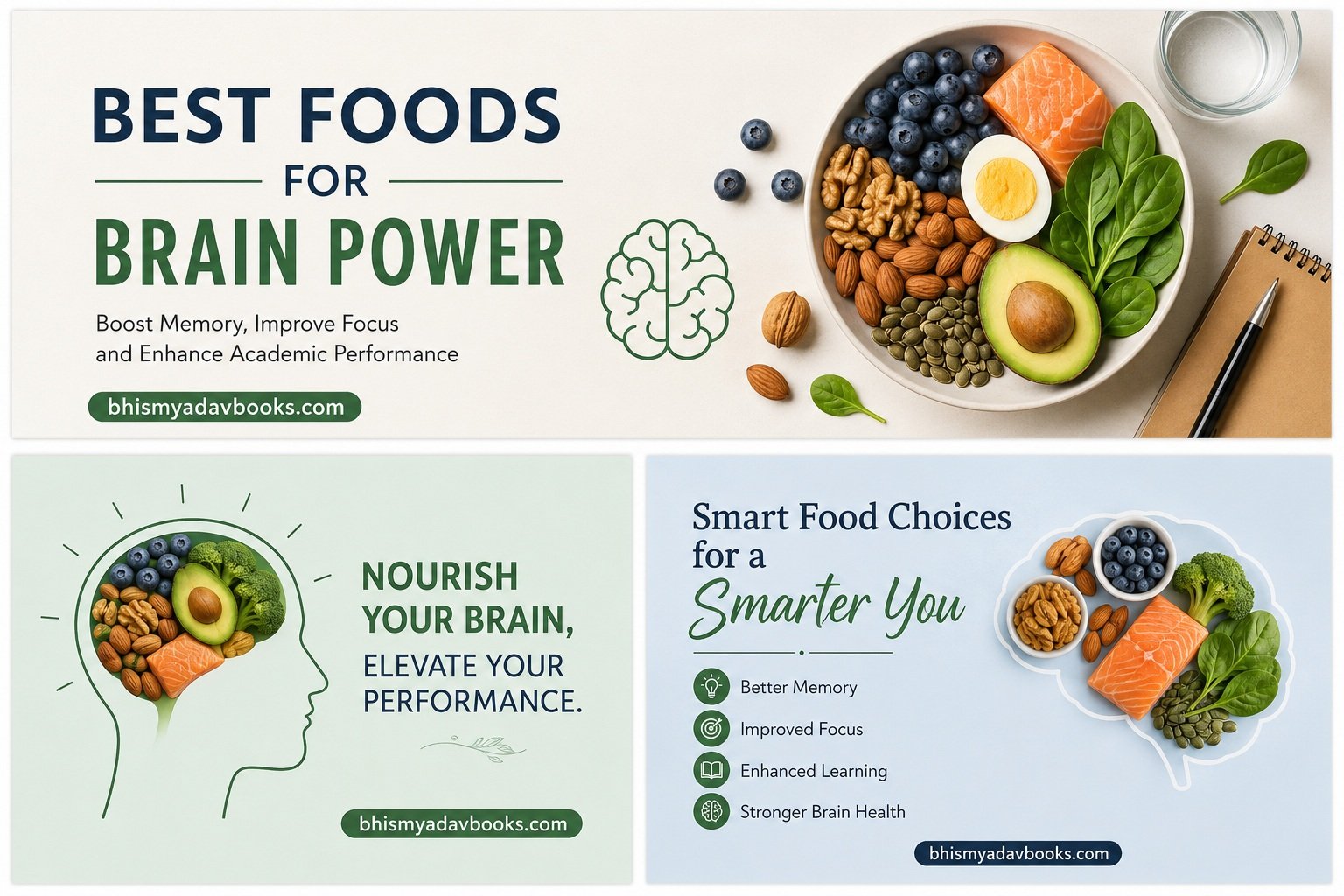
Best Food for Brain Function: A Complete Guide for Students to Boost Memory, Focus, and Academic Performance
Introduction
Students spend countless hours studying, solving problems, attending classes, and preparing for examinations. While many focus on books, coaching, and practice tests, one crucial factor is often ignored—the food that powers the brain.
Your brain is one of the most energy-demanding organs in your body. Although it accounts for only about 2% of your body weight, it consumes nearly 20% of your daily energy. Every thought, memory, calculation, and decision depends on proper nutrition.
We have some amazing books at our Shop page you may want to buy.
Table of Contents
Best Food for Brain Function
Eating the right foods can improve:
- Memory retention
- Concentration
- Learning speed
- Problem-solving ability
- Mental clarity
- Mood stability
- Stress management
- Long-term brain health
This guide explores the best brain foods for students and explains how nutrition can help you perform better in school, college, competitive exams, and professional life.
Why Brain Nutrition Matters
The human brain contains billions of neurons that constantly communicate through electrical and chemical signals.
These neurons require:
- Glucose for energy
- Healthy fats for cell membranes
- Amino acids for neurotransmitters
- Vitamins for brain metabolism
- Minerals for nerve transmission
- Antioxidants for protection against damage
When your diet lacks these nutrients, you may experience:
- Poor concentration
- Forgetfulness
- Mental fatigue
- Low motivation
- Anxiety
- Slow thinking
- Difficulty learning new concepts
A balanced diet supports healthy brain function and helps students stay productive throughout the day.
How Food Affects Memory
Memory formation occurs in three stages:
1. Learning
The brain receives new information.
2. Storage
The information is organized and stored.
3. Recall
The stored information is retrieved when needed.
Brain-friendly foods support all three stages by improving communication between neurons and reducing inflammation.
Nutrients That Help the Brain
Before discussing individual foods, let’s understand the nutrients responsible for brain performance.
1. Omega-3 Fatty Acids
Benefits include:
- Better memory
- Faster learning
- Improved attention
- Reduced brain inflammation
- Stronger neuron connections
Sources include:
- Fish
- Walnuts
- Flaxseeds
- Chia seeds
2. Protein
Proteins provide amino acids that produce neurotransmitters like dopamine and serotonin.
Benefits:
- Better focus
- Increased alertness
- Improved mood
- Enhanced learning
Sources:
- Eggs
- Milk
- Lentils
- Soybeans
- Chicken
- Fish
3. Complex Carbohydrates
The brain primarily uses glucose as fuel.
Healthy carbohydrates provide steady energy instead of sudden spikes.
Examples:
- Oats
- Brown rice
- Whole wheat
- Millets
- Sweet potatoes
4. Healthy Fats
Healthy fats build brain cell membranes.
Sources:
- Nuts
- Seeds
- Avocados
- Olive oil
5. Iron
Iron helps transport oxygen to the brain.
Iron deficiency may cause:
- Fatigue
- Poor memory
- Difficulty concentrating
Foods rich in iron include:
- Spinach
- Beans
- Lentils
- Pumpkin seeds
6. Vitamin B Complex
Vitamin B supports nerve function and energy production.
Rich sources include:
- Whole grains
- Eggs
- Dairy products
- Leafy vegetables
7. Vitamin C
Vitamin C protects brain cells from oxidative stress.
Sources:
- Oranges
- Lemons
- Kiwi
- Guava
- Amla
8. Vitamin E
Vitamin E protects neurons from damage.
Sources:
- Almonds
- Sunflower seeds
- Peanuts
9. Magnesium
Magnesium supports:
- Memory
- Learning
- Better sleep
- Stress reduction
Foods include:
- Pumpkin seeds
- Spinach
- Nuts
- Whole grains
Top Brain Foods Every Student Should Eat
1. Eggs
Eggs are often called nature’s multivitamin.
They provide:
- Choline
- Protein
- Vitamin B12
- Healthy fats
Choline is particularly important because it helps produce acetylcholine, a neurotransmitter involved in memory.
Benefits:
- Better recall
- Improved concentration
- Enhanced learning ability
- Supports brain development
Suggested intake:
One to two eggs daily, unless advised otherwise by a healthcare professional.
2. Walnuts
Walnuts resemble the human brain—and they are excellent for brain health.
Rich in:
- Omega-3 fatty acids
- Antioxidants
- Vitamin E
- Magnesium
Benefits:
- Improved memory
- Better focus
- Reduced mental fatigue
- Protection against cognitive decline
Recommended serving:
A handful of walnuts each day.
3. Almonds
Almonds are among the best snacks for students.
They contain:
- Vitamin E
- Healthy fats
- Magnesium
- Protein
Benefits:
- Sharper memory
- Better concentration
- Stable energy levels
Many students soak almonds overnight before eating them in the morning.
4. Blueberries
Blueberries are considered one of the world’s best brain foods.
They contain powerful antioxidants called anthocyanins.
Benefits:
- Improved communication between brain cells
- Better learning ability
- Reduced brain aging
- Enhanced memory
Fresh or frozen blueberries are equally nutritious.
5. Fatty Fish
Examples include:
- Salmon
- Sardines
- Mackerel
- Tuna
These fish are rich in DHA, an important Omega-3 fatty acid.
Benefits:
- Faster information processing
- Better learning
- Improved attention
- Healthy brain cell membranes
Students who do not eat fish may obtain Omega-3 from plant-based sources like flaxseeds and chia seeds.
6. Dark Chocolate
Good-quality dark chocolate contains flavonoids and small amounts of caffeine.
Benefits:
- Improved blood flow to the brain
- Better mood
- Increased alertness
- Enhanced concentration
Choose dark chocolate with at least 70% cocoa and consume it in moderation.
7. Pumpkin Seeds
Pumpkin seeds provide:
- Zinc
- Iron
- Magnesium
- Copper
These minerals support:
- Memory formation
- Brain signaling
- Learning efficiency
- Stress management
Pumpkin seeds make an excellent study snack.
8. Oats
Oats provide slow-releasing carbohydrates.
Benefits:
- Steady energy
- Improved focus
- Better concentration during long study sessions
A bowl of oatmeal with fruits and nuts is an ideal breakfast before exams.
9. Spinach
Spinach is packed with:
- Iron
- Vitamin K
- Folate
- Antioxidants
Benefits:
- Better oxygen supply to the brain
- Improved memory
- Reduced mental fatigue
Students should include leafy vegetables several times each week.
10. Yogurt
Yogurt supports both gut health and brain health.
It contains:
- Protein
- Calcium
- Probiotics
- Vitamin B12
A healthy gut contributes to improved mood and better cognitive function through the gut-brain connection.
Best Foods for Brain Power – More Brain-Boosting Foods, the Gut-Brain Connection, and Foods Students Should Avoid
In this section, we will continue with additional brain-boosting foods, explain how your digestive system influences brain function, and identify foods that can negatively impact memory, focus, and learning.
11. Avocados
Avocados are rich in healthy monounsaturated fats, which support healthy blood circulation. Better blood flow means more oxygen and nutrients reach the brain.
Nutritional Highlights
- Healthy monounsaturated fats
- Vitamin E
- Vitamin K
- Folate
- Potassium
- Fiber
Benefits for Students
- Improves concentration
- Supports long-term memory
- Maintains steady energy levels
- Reduces brain inflammation
- Promotes healthy nerve function
Students can enjoy avocado on whole-grain toast or add it to salads and sandwiches.
12. Bananas
Bananas are one of the most convenient and affordable brain foods.
They contain:
- Vitamin B6
- Potassium
- Magnesium
- Natural carbohydrates
- Fiber
Brain Benefits
Vitamin B6 helps produce neurotransmitters such as serotonin and dopamine, which influence mood, attention, and learning ability.
Benefits include:
- Quick mental energy
- Better concentration
- Improved mood
- Reduced study fatigue
Bananas make an excellent snack before classes or examinations.
13. Oranges and Citrus Fruits
Vitamin C is one of the most important antioxidants for brain protection.
Excellent sources include:
- Oranges
- Lemons
- Sweet lime
- Grapefruit
- Amla
- Guava
Benefits
- Protects brain cells from oxidative stress
- Improves memory
- Supports healthy blood vessels
- Strengthens the immune system
One orange each day contributes significantly toward daily Vitamin C requirements.
14. Broccoli
Broccoli contains several nutrients essential for healthy brain function.
It is rich in:
- Vitamin K
- Vitamin C
- Fiber
- Antioxidants
Benefits
- Supports cognitive development
- Improves memory
- Protects neurons
- Reduces inflammation
Steamed broccoli preserves more nutrients than overcooking.
15. Green Tea
Green tea contains compounds that improve alertness without causing excessive stimulation.
Important compounds include:
- L-theanine
- Mild caffeine
- Catechins
- Antioxidants
Benefits
- Better concentration
- Calm focus
- Improved learning
- Reduced mental stress
Students preparing for long study sessions may benefit from replacing sugary drinks with green tea.
16. Chia Seeds
Chia seeds are tiny but packed with nutrients.
They provide:
- Omega-3 fatty acids
- Fiber
- Protein
- Calcium
- Magnesium
Brain Benefits
- Better communication between neurons
- Improved concentration
- Sustained energy
- Reduced inflammation
Chia seeds can be added to smoothies, yogurt, milk, or oatmeal.
17. Flaxseeds
Flaxseeds are among the richest vegetarian sources of Omega-3 fatty acids.
Benefits
- Supports memory
- Improves focus
- Promotes healthy brain cells
- Reduces inflammation
Ground flaxseeds are easier for the body to absorb than whole seeds.
18. Whole Grains
Whole grains provide slow-release glucose, which is the brain’s preferred energy source.
Examples include:
- Brown rice
- Whole wheat
- Barley
- Millets
- Quinoa
Benefits
- Stable energy
- Better concentration
- Improved productivity
- Reduced afternoon tiredness
Unlike refined grains, whole grains help maintain steady blood sugar levels.
19. Lentils and Beans
Lentils are rich in:
- Protein
- Iron
- Folate
- Fiber
- Magnesium
Benefits
- Better oxygen supply to the brain
- Improved attention span
- Longer-lasting energy
- Healthy neurotransmitter production
Students following vegetarian diets should regularly include lentils.
20. Sweet Potatoes
Sweet potatoes contain:
- Complex carbohydrates
- Vitamin A
- Fiber
- Potassium
Brain Benefits
- Provides steady energy
- Prevents sudden blood sugar crashes
- Improves mental endurance
- Supports long study sessions
21. Tomatoes
Tomatoes contain lycopene, a powerful antioxidant.
Benefits
- Protects brain cells
- Reduces oxidative damage
- Supports long-term brain health
Cooked tomatoes often provide more absorbable lycopene than raw tomatoes.
22. Beetroot
Beetroot naturally contains nitrates that improve blood circulation.
Benefits
- Better oxygen delivery to the brain
- Improved concentration
- Enhanced mental performance
Fresh beetroot juice can be consumed in moderation.
23. Apples
Apples are rich in:
- Fiber
- Vitamin C
- Quercetin
- Antioxidants
Benefits
- Protects neurons
- Improves concentration
- Maintains stable energy
The saying “An apple a day keeps the doctor away” also supports brain health.
24. Milk
Milk provides:
- Protein
- Calcium
- Vitamin B12
- Vitamin D
Benefits
- Supports healthy nerve function
- Helps maintain concentration
- Aids brain development in growing students
Milk is particularly beneficial as part of breakfast.
25. Water
Although not a food, water is one of the most important nutrients for the brain.
The brain is composed of approximately 75% water.
Even mild dehydration can reduce:
- Attention
- Memory
- Problem-solving ability
- Mood
Students should drink enough water throughout the day, especially during study sessions.
The Gut-Brain Connection
Scientists have discovered a close relationship between the digestive system and the brain.
The gut contains trillions of beneficial bacteria collectively known as the gut microbiome.
These microorganisms influence:
- Mood
- Memory
- Learning
- Stress response
- Immune function
A healthy gut supports healthy brain function through what is known as the gut-brain axis.
Foods that nourish beneficial gut bacteria include:
- Yogurt
- Kefir
- Fruits
- Vegetables
- Whole grains
- Legumes
Maintaining gut health can improve mental clarity and overall well-being.
Foods That Can Reduce Brain Performance
While certain foods enhance cognitive function, others may impair memory, concentration, and energy when consumed excessively.
1. Sugary Drinks
Soft drinks, energy drinks, and sweetened beverages can cause rapid spikes and crashes in blood sugar.
Possible effects include:
- Reduced focus
- Fatigue
- Difficulty concentrating
- Increased risk of obesity
2. Highly Processed Foods
Examples include:
- Chips
- Instant noodles
- Packaged snacks
- Fast food
These foods are often high in unhealthy fats, sodium, and artificial additives.
Potential effects:
- Increased inflammation
- Lower energy levels
- Reduced cognitive performance
3. Excessive Refined Sugar
Eating too many sweets may contribute to:
- Brain fog
- Poor memory
- Difficulty learning
- Mood swings
Moderation is key.
4. Excessive Fried Foods
Foods fried repeatedly in unhealthy oils may contain harmful compounds that increase inflammation and negatively affect overall health.
Choose grilled, steamed, or baked foods whenever possible.
5. Too Much Caffeine
Moderate caffeine intake can improve alertness.
However, excessive consumption may lead to:
- Anxiety
- Poor sleep
- Restlessness
- Reduced concentration the next day
Students should avoid relying on large amounts of caffeinated beverages for studying.
Smart Eating Habits for Students
Eating healthy foods is important, but eating them consistently and at the right times matters just as much.
Start Your Day with Breakfast
A balanced breakfast provides the brain with the energy needed for morning classes and study sessions.
Healthy options include:
- Oatmeal with nuts and fruits
- Eggs with whole-grain toast
- Yogurt with berries
- Vegetable sandwich with milk
Eat Small Balanced Meals
Avoid skipping meals or eating very large portions.
Smaller, balanced meals help maintain stable energy and prevent sluggishness.
Choose Healthy Snacks
Instead of chips or sugary snacks, choose:
- Almonds
- Walnuts
- Fresh fruits
- Roasted chickpeas
- Yogurt
- Pumpkin seeds
These snacks provide sustained energy and valuable nutrients.
Stay Hydrated
Keep a water bottle nearby while studying and drink water regularly throughout the day to support concentration and prevent fatigue.
Best Foods for Brain Power – Brain-Healthy Meal Plans, Foods Before Exams, Memory Nutrition Tips, and Lifestyle Habits
In this part, you’ll learn how to build a brain-friendly daily meal plan, what to eat before examinations, how nutrition supports memory, and which lifestyle habits maximize brain performance.
A Complete Brain-Healthy Daily Meal Plan for Students
Eating healthy isn’t just about choosing the right foods—it’s also about eating them at the right time. A balanced meal plan helps maintain steady energy, improves focus, and prevents mental fatigue.
Early Morning (6:00–7:00 AM)
Start your day by hydrating your body after a night’s sleep.
Recommended:
- 1–2 glasses of water
- 4–6 soaked almonds
- 2 walnuts
- 1 teaspoon flaxseeds or chia seeds (optional)
- Fresh fruit such as a banana, apple, or orange
Benefits
- Rehydrates the brain
- Provides healthy fats
- Supplies antioxidants
- Boosts morning alertness
Breakfast (7:30–9:00 AM)
Breakfast is often called the most important meal for the brain.
Healthy Breakfast Options
Option 1
- Oatmeal
- Milk
- Banana
- Walnuts
Option 2
- Vegetable omelet
- Whole wheat toast
- Fruit
Option 3
- Yogurt
- Mixed berries
- Pumpkin seeds
Option 4
- Vegetable poha
- Boiled eggs
- Fresh fruit
Benefits
- Stable glucose supply
- Better concentration
- Improved classroom performance
- Increased alertness
Mid-Morning Snack
Instead of processed snacks, choose foods that nourish the brain.
Examples:
- Apple
- Pear
- Orange
- Guava
- Roasted chickpeas
- Handful of nuts
Lunch
A balanced lunch should include carbohydrates, protein, vegetables, and healthy fats.
Example:
- Brown rice or whole wheat chapati
- Dal or beans
- Spinach
- Mixed vegetables
- Salad
- Yogurt
Benefits
- Long-lasting energy
- Better focus during afternoon study
- Healthy digestion
Evening Snack
Many students become hungry while studying in the evening.
Healthy choices include:
- Fruit smoothie
- Roasted peanuts
- Boiled corn
- Yogurt
- Sprouts
- Green tea
- Mixed nuts
Avoid:
- Sugary soft drinks
- Packaged chips
- Candy
- Instant noodles
Dinner
Dinner should be light yet nutritious.
Example:
- Chapati
- Mixed vegetables
- Lentils
- Paneer or grilled fish/chicken
- Salad
Avoid overeating before bedtime, as heavy meals may disturb sleep.
Before Bed
If hungry:
- Warm milk
- A few almonds
- Banana
These foods support better sleep, which is essential for memory consolidation.
Best Foods Before an Exam
Many students wonder what they should eat on exam day. The goal is to maintain steady energy and concentration without causing sluggishness.
Ideal Exam-Day Breakfast
- Oatmeal
- Eggs
- Fruit
- Milk
- Whole grain toast
OR
- Vegetable sandwich
- Yogurt
- Banana
Foods to Eat 1–2 Hours Before an Exam
Choose light, balanced meals such as:
- Banana
- Apple
- Yogurt
- Nuts
- Whole grain sandwich
- Oats
- Boiled eggs
These foods provide slow-releasing energy and help sustain concentration.
Foods to Avoid Before an Exam
Avoid:
- Heavy fried foods
- Sugary desserts
- Excessive caffeine
- Energy drinks
- Soft drinks
- Large portions of fast food
These can cause digestive discomfort, energy crashes, or reduced focus during the exam.
Nutrition Tips for Better Memory
Memory depends on consistent brain nourishment rather than any single “superfood.”
1. Never Skip Breakfast
Skipping breakfast may reduce attention, memory, and problem-solving ability.
2. Eat Protein with Every Meal
Protein provides amino acids needed to produce neurotransmitters that support learning and concentration.
Good protein sources include:
- Eggs
- Lentils
- Beans
- Milk
- Yogurt
- Fish
- Chicken
- Soy products
3. Include Healthy Fats Daily
Healthy fats help maintain brain cell membranes and support communication between neurons.
Sources:
- Walnuts
- Almonds
- Flaxseeds
- Chia seeds
- Fish
4. Eat Colorful Fruits and Vegetables
Different colors indicate different antioxidants that protect brain cells.
Aim to include:
- Green vegetables
- Orange vegetables
- Red fruits
- Purple berries
- Yellow fruits
5. Stay Hydrated
Even mild dehydration can affect:
- Concentration
- Reaction time
- Memory
- Mood
Drink water regularly throughout the day.
6. Avoid Long Gaps Between Meals
Long periods without food may reduce blood glucose levels, leading to fatigue and poor concentration.
Eat balanced meals and healthy snacks at regular intervals.
The Importance of Sleep for Brain Power
Nutrition and sleep work together to support learning.
During sleep, the brain:
- Organizes information
- Strengthens memories
- Removes waste products
- Repairs brain cells
Students generally need sufficient sleep each night according to their age and individual needs. Regular sleep schedules support better attention, memory, and overall health.
Poor sleep may result in:
- Difficulty concentrating
- Poor recall
- Reduced learning efficiency
- Increased stress
- Lower academic performance
Exercise Improves Brain Function
Physical activity increases blood flow to the brain and supports the growth of new neural connections.
Benefits include:
- Better memory
- Improved mood
- Faster learning
- Reduced stress
- Better concentration
Recommended activities:
- Walking
- Cycling
- Swimming
- Running
- Yoga
- Skipping rope
- Sports
Even 30 minutes of regular exercise can positively influence brain health.
Stress and Brain Performance
Chronic stress increases cortisol, a hormone that may interfere with memory and concentration when levels remain elevated over time.
Ways to reduce stress:
- Deep breathing
- Meditation
- Yoga
- Regular exercise
- Listening to calming music
- Talking with friends or family
- Spending time in nature
Brain-Friendly Study Habits
Nutrition is only one part of effective learning.
Combine healthy eating with these study habits:
Study in Short Sessions
Use focused sessions of 25–50 minutes followed by short breaks.
Revise Regularly
Reviewing information several times strengthens long-term memory.
Practice Active Recall
Instead of only rereading notes, try answering questions without looking at the material.
Use Spaced Repetition
Review information over increasing intervals rather than cramming everything at once.
Minimize Distractions
Turn off unnecessary notifications while studying.
Create a Consistent Routine
Studying at the same time each day helps train your brain to focus more effectively.
Common Myths About Brain Foods
Myth 1: One Superfood Can Make You Smarter
Reality: No single food dramatically increases intelligence. Brain health depends on an overall balanced diet, regular physical activity, quality sleep, and consistent study habits.
Myth 2: Sugar Helps You Study Better
Reality: Sugary snacks may provide a brief burst of energy, but they are often followed by a rapid decline in energy and concentration.
Myth 3: Energy Drinks Improve Memory
Reality: Energy drinks may temporarily increase alertness because of caffeine and sugar, but they do not improve learning or long-term memory and may disturb sleep if consumed excessively.
Myth 4: Skipping Meals Helps You Stay Alert
Reality: Skipping meals can reduce the steady supply of nutrients and energy your brain needs, making concentration more difficult.
Myth 5: Supplements Can Replace Healthy Food
Reality: Most healthy students benefit more from a varied, nutrient-rich diet than from relying on supplements. Supplements should only be taken when recommended by a qualified healthcare professional.
Brain Foods for Vegetarian Students
Vegetarian students can meet most of their nutritional needs with thoughtful food choices.
Excellent vegetarian brain foods include:
- Almonds
- Walnuts
- Peanuts
- Flaxseeds
- Chia seeds
- Oats
- Lentils
- Chickpeas
- Kidney beans
- Soybeans
- Tofu
- Paneer
- Milk
- Yogurt
- Green leafy vegetables
- Fruits
- Whole grains
A well-planned vegetarian diet can provide protein, healthy fats, vitamins, minerals, and antioxidants that support memory, focus, and learning.
Best Foods for Brain Power – 7-Day Meal Plan, FAQs, Brain-Boosting Snacks, Long-Term Habits, and Final Conclusion
In this section, you’ll find a practical 7-day meal plan, healthy snack ideas, nutrient-based food categories, an SEO-friendly FAQ section, and long-term habits that will help students maximize brain power.
7-Day Brain-Healthy Meal Plan for Students
Day 1
Breakfast
- Oatmeal with milk
- Banana
- Walnuts
Mid-Morning Snack
- Apple
Lunch
- Brown rice
- Dal
- Spinach
- Salad
- Yogurt
Evening Snack
- Roasted chickpeas
- Green tea
Dinner
- Whole wheat chapati
- Mixed vegetables
- Paneer
Day 2
Breakfast
- Vegetable omelet
- Whole wheat toast
- Orange
Snack
- Almonds
Lunch
- Chapati
- Rajma
- Cucumber salad
Evening Snack
- Yogurt with pumpkin seeds
Dinner
- Vegetable soup
- Whole wheat bread
Day 3
Breakfast
- Poha with vegetables
- Milk
Snack
- Pear
Lunch
- Brown rice
- Grilled fish or tofu
- Mixed vegetables
Evening Snack
- Banana
- Walnuts
Dinner
- Lentil soup
- Chapati
- Salad
Day 4
Breakfast
- Idli with sambar
- Fresh fruit
Snack
- Mixed nuts
Lunch
- Vegetable pulao
- Yogurt
Evening Snack
- Apple
Dinner
- Chapati
- Spinach curry
- Paneer
Day 5
Breakfast
- Vegetable upma
- Milk
Snack
- Orange
Lunch
- Brown rice
- Chickpeas
- Salad
Evening Snack
- Roasted peanuts
Dinner
- Vegetable soup
- Whole grain bread
Day 6
Breakfast
- Oats with berries
- Almonds
Snack
- Guava
Lunch
- Chapati
- Mixed vegetables
- Dal
Evening Snack
- Yogurt
Dinner
- Grilled chicken or soy chunks
- Vegetables
Day 7
Breakfast
- Whole wheat sandwich
- Boiled eggs
- Banana
Snack
- Mixed fruits
Lunch
- Brown rice
- Lentils
- Spinach
- Salad
Evening Snack
- Pumpkin seeds
Dinner
- Vegetable curry
- Chapati
- Yogurt
Healthy Brain Snacks for Students
Healthy snacks provide sustained energy between meals and help maintain concentration.
Excellent snack options include:
- Almonds
- Walnuts
- Pistachios
- Pumpkin seeds
- Sunflower seeds
- Roasted peanuts
- Roasted chickpeas
- Yogurt
- Cottage cheese (Paneer)
- Apple slices
- Banana
- Orange
- Pear
- Grapes
- Mixed fruit bowl
- Oatmeal
- Vegetable sandwich
- Whole grain crackers
- Boiled eggs
- Homemade smoothies
These snacks are easy to prepare and ideal during study sessions.
Brain Foods by Nutrient
Omega-3 Fatty Acids
- Salmon
- Sardines
- Mackerel
- Walnuts
- Flaxseeds
- Chia seeds
Protein
- Eggs
- Milk
- Yogurt
- Paneer
- Lentils
- Chickpeas
- Soybeans
- Chicken
- Fish
Iron
- Spinach
- Lentils
- Kidney beans
- Pumpkin seeds
- Tofu
Vitamin C
- Orange
- Guava
- Lemon
- Kiwi
- Amla
- Strawberries
Vitamin E
- Almonds
- Sunflower seeds
- Peanuts
- Hazelnuts
Magnesium
- Pumpkin seeds
- Spinach
- Almonds
- Whole grains
Zinc
- Pumpkin seeds
- Beans
- Chickpeas
- Dairy products
Antioxidants
- Blueberries
- Strawberries
- Tomatoes
- Spinach
- Dark chocolate
- Green tea
Foods to Include During Exam Preparation
Students preparing for competitive examinations should prioritize foods that provide stable energy and support concentration.
Recommended foods include:
- Oatmeal
- Eggs
- Yogurt
- Bananas
- Apples
- Blueberries
- Whole grains
- Walnuts
- Almonds
- Pumpkin seeds
- Lentils
- Spinach
- Green vegetables
- Milk
- Water
These foods help maintain focus during long study sessions and examinations.
Lifestyle Habits That Support Brain Power
Nutrition alone cannot maximize brain performance. Combining healthy eating with good daily habits creates the best environment for learning.
Maintain a Regular Study Schedule
Study at the same time every day to build consistency.
Exercise Regularly
Aim for regular physical activity to improve blood circulation and brain function.
Sleep Well
Adequate sleep is essential for memory consolidation and mental recovery.
Drink Plenty of Water
Hydration supports attention, thinking, and overall brain function.
Practice Mindfulness
Meditation and deep breathing may help reduce stress and improve focus.
Take Short Study Breaks
Brief breaks between study sessions help reduce mental fatigue and maintain productivity.
Spend Time Outdoors
Natural light and fresh air can improve mood and mental well-being.
Limit Screen Time Before Bed
Reducing screen exposure before sleep may support better sleep quality.
Recommended books for Job Aspirants
Frequently Asked Questions (FAQs)
1. Which food is best for improving memory?
Foods rich in Omega-3 fatty acids, antioxidants, healthy fats, and protein—such as walnuts, eggs, blueberries, salmon, almonds, and spinach—are among the best choices for supporting memory.
2. Can food improve concentration?
Yes. A balanced diet containing whole grains, fruits, vegetables, protein, healthy fats, and adequate water can help maintain steady energy levels and improve concentration.
3. Is dark chocolate good for students?
Dark chocolate with a high cocoa content (around 70% or more) can be enjoyed in moderation as part of a balanced diet. It contains antioxidants and small amounts of caffeine that may temporarily improve alertness.
4. How much water should students drink?
Water needs vary depending on age, activity level, climate, and health. Students should drink water regularly throughout the day and increase intake during hot weather or physical activity.
5. Is breakfast necessary before studying?
Yes. A balanced breakfast provides the brain with energy after an overnight fast and can improve attention, memory, and learning.
6. Can supplements replace healthy food?
No. For most healthy students, a varied and balanced diet is the best source of nutrients. Supplements should only be used when recommended by a qualified healthcare professional.
7. Which fruit is best for brain health?
Several fruits support brain health, including:
- Blueberries
- Apples
- Bananas
- Oranges
- Guava
- Strawberries
- Kiwi
Eating a variety of fruits provides a broad range of vitamins and antioxidants.
8. What should students avoid while studying?
Try to limit:
- Sugary soft drinks
- Highly processed snacks
- Excessive fried foods
- Too much caffeine
- Large amounts of sweets
Replacing these with nutritious snacks can help support sustained concentration.
Other Related Posts from Bhism Yadav Books
Key Takeaways
- The brain requires a steady supply of nutrients to function efficiently.
- A balanced diet supports memory, learning, concentration, and mental performance.
- Healthy fats, protein, vitamins, minerals, and antioxidants all contribute to brain health.
- Regular meals, hydration, physical activity, and adequate sleep work together to improve cognitive performance.
- Consistency is more important than relying on any single “superfood.”
Conclusion
Your brain is your most valuable learning tool, and the food you eat directly influences how well it performs. Whether you are preparing for school examinations, board exams, competitive tests, or higher education, proper nutrition can help you stay focused, remember information more effectively, and maintain steady energy throughout the day.
The best approach is not to search for one magical brain food but to build a balanced lifestyle. Include plenty of fruits, vegetables, whole grains, lean proteins, healthy fats, nuts, seeds, and adequate water in your daily routine. Pair these healthy eating habits with regular exercise, quality sleep, stress management, and consistent study techniques to unlock your full academic potential.
Remember, success in learning is built one healthy habit at a time. By making smart food choices today, you invest in stronger memory, sharper concentration, and lifelong brain health.