Introduction
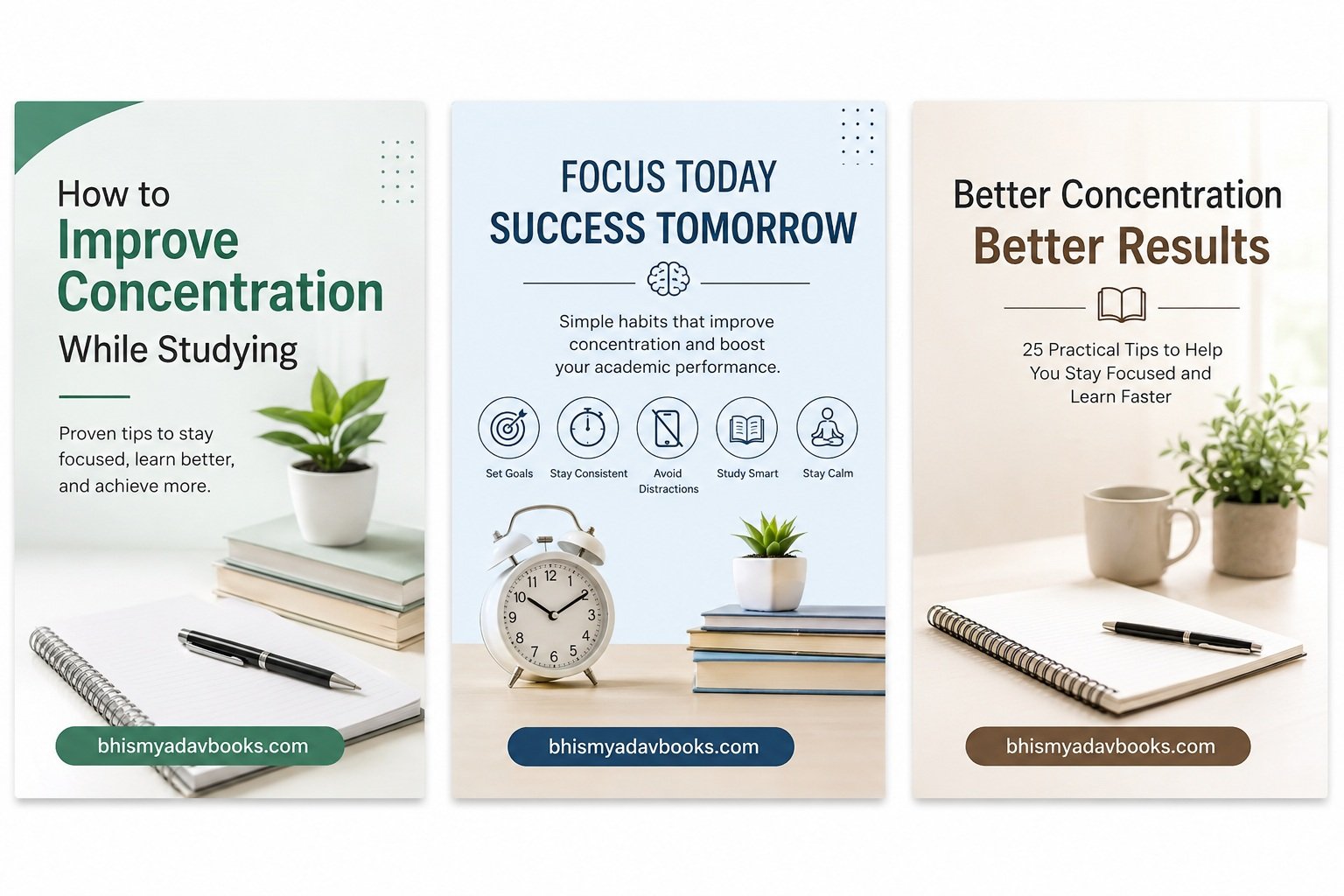
How to Improve Concentration While Studying: 25 Proven Tips to Stay Focused and Learn Faster
Studying effectively is not just about spending long hours with books. The real key to academic success lies in concentration. Many students complain that they sit at their study table for hours but remember very little because their minds keep wandering. Mobile phones, social media, noisy environments, stress, lack of sleep, and poor study habits all contribute to reduced concentration.
Fortunately, concentration is not an inborn talent. It is a skill that can be developed with practice and the right techniques. Whether you are preparing for school exams, college entrance tests, competitive examinations like UPSC, SSC, Banking, Railway, NEET, JEE, or simply trying to improve your learning efficiency, strengthening your focus can dramatically improve your performance.
We have some amazing books at our Shop page you may want to buy.
Table of Contents
This comprehensive guide explains the science behind concentration, common reasons for distraction, and practical techniques that will help you study smarter instead of harder.
Why Concentration Matters
Concentration is the ability to focus your attention on a single task without getting distracted.
When your concentration improves, you can:
- Learn new concepts faster
- Remember information for a longer period
- Reduce study time
- Improve exam scores
- Feel less stressed
- Increase confidence
- Complete syllabus on time
- Reduce careless mistakes
Highly successful students are not always the smartest—they are often the ones who have mastered the art of focusing.
Understanding How Concentration Works
The human brain constantly receives information from the environment.
Every second, your brain processes:
- Sounds
- Notifications
- Thoughts
- Emotions
- Visual distractions
- Memories
- External conversations
Concentration means filtering unnecessary information and focusing only on the task that matters.
The brain’s prefrontal cortex plays an important role in attention, decision-making, and self-control. Like muscles, this part of the brain becomes stronger when trained regularly.
Common Reasons Students Lose Concentration
Before improving focus, it is important to understand why concentration decreases.
1. Mobile Phone Addiction
Constant notifications interrupt deep thinking.
Checking your phone every few minutes forces the brain to restart its focus repeatedly.
2. Social Media
Instagram, YouTube Shorts, Facebook, Snapchat, and endless scrolling reduce attention span.
The brain becomes accustomed to quick entertainment rather than sustained learning.
3. Multitasking
Many students believe they can:
- Listen to music
- Reply to messages
- Watch videos
- Study simultaneously
Scientific studies show that multitasking reduces productivity and increases mistakes.
4. Lack of Sleep
Sleep is when the brain organizes memories.
Poor sleep leads to:
- Low attention
- Forgetfulness
- Mental fatigue
- Slow learning
5. Stress and Anxiety
Worry about exams, family issues, or future career goals can consume mental energy.
An anxious mind struggles to focus on studying.
6. Poor Diet
The brain requires nutrients for optimal performance.
Excess junk food and sugary drinks often result in energy crashes and reduced concentration.
7. Studying Without Goals
Sitting with books without knowing what to accomplish makes the brain wander.
Always have a clear objective before beginning a study session.
Signs That Your Concentration Needs Improvement
You may have concentration problems if you:
- Read the same paragraph repeatedly
- Forget what you studied quickly
- Frequently check your phone
- Daydream while reading
- Feel mentally tired within a few minutes
- Skip difficult topics
- Take excessive breaks
- Cannot complete study plans
Recognizing these signs early allows you to adopt better study habits.
1. Create a Dedicated Study Space
Your study environment has a major impact on concentration.
Choose a place that is:
- Quiet
- Well-lit
- Comfortable
- Organized
- Free from unnecessary distractions
Keep only essential study materials on your desk.
Avoid studying on your bed because the brain associates beds with sleep rather than focused work.
A dedicated study area trains your brain to enter “study mode” whenever you sit there.
2. Set Clear Study Goals
Never begin studying without a plan.
Instead of saying:
“I will study Mathematics.”
Say:
- Complete Chapter 5
- Solve 30 practice questions
- Revise formulas
- Finish one mock test
Specific goals increase motivation and help maintain concentration.
3. Follow the Pomodoro Technique
Studying continuously for several hours often reduces efficiency.
Instead:
- Study for 25 minutes
- Take a 5-minute break
- Repeat four times
- Take a longer 20–30 minute break
This method prevents mental fatigue and keeps your attention fresh throughout the day.
4. Remove Digital Distractions
Turn off:
- Mobile notifications
- Social media alerts
- Unnecessary browser tabs
- Television
- Gaming devices
If possible:
- Keep your phone in another room.
- Use Focus Mode or Do Not Disturb mode.
- Check messages only during scheduled breaks.
Small distractions repeatedly interrupt deep concentration.
5. Study at Your Most Productive Time
Everyone has different energy levels.
Some students focus best:
- Early morning
- Afternoon
- Evening
- Late at night
Observe when your mind feels most alert and schedule your most difficult subjects during those hours.
6. Divide Large Tasks into Smaller Goals
Large chapters often appear overwhelming.
Instead of studying:
“Entire Biology Chapter”
Break it into:
- Introduction
- Definitions
- Diagrams
- Important concepts
- Practice questions
- Revision
Small achievements increase motivation and reduce procrastination.
7. Keep Everything Ready Before Studying
Avoid getting up repeatedly for:
- Water
- Calculator
- Pens
- Notebook
- Charger
- Textbooks
Prepare everything beforehand.
Every interruption forces your brain to regain focus, wasting valuable study time.
8. Practice Active Learning Instead of Passive Reading
One of the biggest mistakes students make is reading textbooks repeatedly without actively engaging with the material.
Passive reading often creates the illusion of learning, but it does not guarantee understanding or long-term memory.
What is Active Learning?
Active learning means interacting with the study material instead of simply reading it.
Examples include:
- Asking questions while reading
- Writing short notes
- Explaining concepts in your own words
- Solving practice questions
- Creating flashcards
- Teaching someone else
Benefits of Active Learning
- Improves concentration
- Enhances understanding
- Increases long-term memory
- Makes studying more interesting
- Identifies weak areas quickly
Instead of asking, “What does this paragraph say?” ask yourself:
- Why is this concept important?
- How does it work?
- Where can it be applied?
- Can I explain it without looking at the book?
9. Use the Feynman Technique
The Feynman Technique, named after Nobel Prize-winning physicist Richard Feynman, is one of the best methods to improve both concentration and understanding.
Step 1: Choose a Topic
Select one concept that you want to study.
Example:
- Photosynthesis
- Newton’s Laws
- Probability
- Inflation
- Computer Networks
Step 2: Explain It Like You’re Teaching a Beginner
Pretend you’re teaching a child or a friend who has never studied the topic before.
Use simple language.
Step 3: Identify Knowledge Gaps
Whenever you get stuck, go back to your textbook and relearn that section.
Step 4: Simplify Further
Remove complex words and make the explanation even easier.
Why It Works
Teaching forces your brain to organize information logically.
Instead of memorizing, you truly understand the topic, making it easier to remember during exams.
10. Take Short, Planned Breaks
Studying continuously for several hours reduces mental performance.
The brain requires brief periods of rest to recharge.
What Should You Do During Breaks?
Good break activities include:
- Stretching
- Drinking water
- Walking
- Looking outside
- Deep breathing
- Light snacks
- Eye relaxation exercises
Avoid During Breaks
- Social media scrolling
- Watching long videos
- Gaming
- Endless chatting
These activities often extend your break much longer than intended and make it difficult to return to studying.
11. Practice Mindfulness and Deep Breathing
A distracted mind cannot learn effectively.
Mindfulness trains your brain to stay in the present moment.
Simple Deep Breathing Exercise
- Sit comfortably.
- Close your eyes.
- Inhale slowly through your nose for 4 seconds.
- Hold your breath for 4 seconds.
- Exhale slowly for 6 seconds.
- Repeat for 2–5 minutes.
Benefits
- Reduces stress
- Improves attention
- Calms anxiety
- Increases mental clarity
- Enhances concentration
Practicing mindfulness before studying prepares your brain for focused learning.
12. Get Enough Sleep Every Night
Many students sacrifice sleep believing that studying late at night increases productivity.
In reality, poor sleep reduces learning efficiency.
Why Sleep Matters
During sleep, the brain:
- Organizes memories
- Removes unnecessary information
- Strengthens learning
- Restores energy
- Improves attention
Recommended Sleep Duration
| Age Group | Recommended Sleep |
| Teenagers | 8–10 hours |
| Adults | 7–9 hours |
Avoid all-night study sessions whenever possible.
Consistent sleep is more beneficial than last-minute cramming.
13. Eat Brain-Healthy Foods
The brain consumes approximately 20% of the body’s energy, even though it accounts for only a small percentage of body weight.
Healthy nutrition supports concentration and memory.
Foods That Help Brain Function
Fruits
- Apples
- Bananas
- Blueberries
- Oranges
- Pomegranates
Vegetables
- Spinach
- Broccoli
- Carrots
- Tomatoes
- Beetroot
Nuts and Seeds
- Almonds
- Walnuts
- Pumpkin seeds
- Sunflower seeds
- Flaxseeds
Protein Sources
- Eggs
- Milk
- Yogurt
- Paneer
- Lentils
- Beans
Healthy Drinks
- Water
- Coconut water
- Lemon water
- Milk
Foods to Limit
- Sugary soft drinks
- Excess fast food
- Chips
- Candy
- Excessive caffeine
- Energy drinks
A balanced diet helps maintain steady energy levels and prevents sudden fatigue while studying.
14. Exercise Regularly
Exercise benefits not only the body but also the brain.
Physical activity increases blood flow and oxygen supply to the brain, improving concentration and mood.
Good Exercises for Students
- Walking
- Jogging
- Cycling
- Yoga
- Stretching
- Skipping rope
- Bodyweight exercises
How Much Exercise?
Aim for 30–45 minutes of moderate physical activity on most days of the week.
Even a 10-minute walk before studying can improve alertness.
15. Develop a Consistent Study Routine
The brain loves routines.
Studying at the same time every day helps your mind prepare for focused work.
Example Study Routine
Morning
- Wake up early
- Drink water
- Light exercise
- Revise previous lessons
Afternoon
- Learn new topics
- Solve practice questions
- Take short breaks
Evening
- Review difficult concepts
- Complete assignments
- Revise notes
Night
- Plan tomorrow’s study schedule
- Sleep on time
Benefits of a Routine
- Reduces procrastination
- Builds discipline
- Improves concentration
- Creates healthy study habits
- Makes learning more consistent
Bonus Tips to Stay Focused During Study Sessions
In addition to the major techniques above, these small habits can significantly improve concentration:
Keep a “Distraction Notebook”
Whenever an unrelated thought comes to mind (such as remembering to call someone or buy something), write it down instead of acting on it immediately. This allows you to stay focused and deal with the task later.
Use a Timer
Setting a timer creates a sense of urgency and helps you remain committed to your study session without constantly checking the clock.
Change Subjects Strategically
If you feel mentally exhausted with one subject, switch to another after completing a planned study block. This refreshes your mind while maintaining productivity.
Reward Yourself
Celebrate small achievements after completing study goals.
Examples:
- Enjoy your favorite snack
- Listen to music for a few minutes
- Take a short walk
- Watch one short educational video
Positive reinforcement increases motivation and encourages consistent study habits.
Common Myths About Concentration
Myth 1: Some People Are Naturally Focused
Reality: Concentration is a skill developed through practice and discipline.
Myth 2: Longer Study Hours Mean Better Results
Reality: Quality of study matters far more than quantity.
Myth 3: Music Always Improves Concentration
Reality: While some students benefit from soft instrumental music, others concentrate better in complete silence. Experiment to discover what works best for you.
Myth 4: Multitasking Saves Time
Reality: Switching between tasks reduces efficiency and increases mistakes.
16. Train Your Brain with Concentration Exercises
Just like muscles become stronger with regular exercise, your brain’s ability to concentrate improves with practice.
Simple Concentration Exercises
1. Read Without Distractions
Read one page of a book and try not to lose focus.
If your mind wanders, gently bring your attention back to the text.
2. Number Counting Exercise
Count slowly from 1 to 100.
Then count backward from 100 to 1.
After that:
- Count only odd numbers.
- Count only even numbers.
- Skip every third number.
This improves mental control and attention.
3. Observation Exercise
Look at an object such as a pen or notebook.
Observe it carefully for one minute.
Notice:
- Shape
- Color
- Texture
- Size
- Details
This strengthens your attention span.
4. Memory Recall Exercise
Study a picture for 30 seconds.
Close the picture.
Write everything you remember.
Repeat daily to improve both concentration and memory.
5. Reading Aloud
Reading difficult concepts aloud engages multiple senses.
You:
- See the words.
- Speak the words.
- Hear yourself.
This improves understanding and reduces distractions.
17. Improve Your Memory Along with Concentration
Concentration and memory work together.
Better concentration leads to stronger memory.
Use Mnemonics
Example:
VIBGYOR
helps remember the colors of the rainbow:
- Violet
- Indigo
- Blue
- Green
- Yellow
- Orange
- Red
Use Acronyms
Create short words using the first letters of important information.
Example:
PEMDAS
for mathematical operations.
Use Mind Maps
Mind maps connect ideas visually.
Instead of memorizing pages of text, create diagrams showing:
- Main topic
- Subtopics
- Key facts
- Examples
- Relationships
This improves understanding and recall.
Use Flashcards
Write:
Front side:
Question
Back side:
Answer
Review them regularly.
Flashcards are excellent for:
- Vocabulary
- Formulas
- Dates
- Definitions
- Current affairs
18. Avoid Procrastination
Procrastination is one of the biggest enemies of concentration.
Students often delay studying because:
- The task looks difficult.
- They feel tired.
- They don’t know where to begin.
- They fear failure.
- They prefer entertainment.
The 5-Minute Rule
Tell yourself:
“I’ll study for only five minutes.”
Most of the time, once you begin, you’ll continue studying much longer.
Starting is usually the hardest part.
Break Difficult Tasks
Instead of:
“Finish entire Chemistry chapter.”
Say:
- Read pages 1–5.
- Solve ten questions.
- Revise formulas.
Small goals feel manageable.
Eliminate Excuses
Replace:
“I’ll start tomorrow.”
With:
“I’ll study one page now.”
Small actions build momentum.
19. Stay Motivated While Studying
Motivation helps maintain concentration over the long term.
Set Long-Term Goals
Examples:
- Become an IAS Officer.
- Crack SSC CGL.
- Qualify NEET.
- Clear JEE.
- Get admission to a dream college.
Keep your goal visible near your study table.
Celebrate Small Wins
Reward yourself after completing:
- One chapter
- One mock test
- Weekly goals
- Monthly targets
Rewards can include:
- Favorite snack
- Short walk
- Watching an educational video
- Listening to music during a break
Track Your Progress
Maintain a study journal.
Record:
- Hours studied
- Chapters completed
- Practice questions solved
- Mock test scores
- Weak topics
Seeing progress increases confidence.
20. Use Technology Wisely
Technology can either improve concentration or destroy it.
Use it carefully.
Helpful Study Apps
Consider using apps that support learning by offering:
- Flashcards
- Task management
- Note-taking
- Timers
- Habit tracking
- Digital planners
Avoid
- Endless scrolling
- Random YouTube recommendations
- Unnecessary notifications
- Online arguments
- Gaming during study hours
Technology should serve your learning goals, not distract you from them.
21. Manage Stress Effectively
Stress affects concentration more than most students realize.
Common causes include:
- Exam pressure
- Fear of failure
- Family expectations
- Lack of preparation
- Poor time management
Ways to Reduce Stress
Exercise
Physical activity releases endorphins that improve mood.
Meditation
Five to ten minutes daily can calm the mind.
Talk to Someone
Discuss your concerns with:
- Parents
- Teachers
- Friends
- Mentors
Sometimes sharing problems reduces mental burden.
Avoid Comparison
Focus on improving yourself instead of comparing your progress with others.
Everyone learns at a different pace.
22. Practice Daily Revision
Revision strengthens concentration and prevents forgetting.
Instead of studying something once, review it regularly.
A Simple Revision Schedule
First Revision: Within 24 hours
Second Revision: After 3 days
Third Revision: After 7 days
Fourth Revision: After 15 days
Final Revision: Before the exam
Regular revision transfers information from short-term memory to long-term memory.
Common Mistakes That Reduce Concentration
Avoid these habits if you want to stay focused.
Studying with Television On
Background television divides your attention.
Keeping Mobile Phone Nearby
Even without checking it, seeing your phone can tempt you to pick it up.
Keep it away during study sessions.
Studying Without Breaks
Long, uninterrupted sessions reduce productivity.
Take short, planned breaks.
Skipping Meals
Hunger reduces energy and attention.
Eat balanced meals at regular times.
Drinking Too Much Caffeine
Moderate amounts may increase alertness, but excessive caffeine can cause:
- Nervousness
- Anxiety
- Poor sleep
- Reduced concentration
Studying Only Easy Subjects
Avoiding difficult topics creates gaps in your preparation.
Start with challenging subjects when your mind is freshest.
Ignoring Physical Health
Poor posture, dehydration, and lack of exercise can reduce focus.
Take care of your body to support your brain.
A Sample Daily Study Schedule for Better Concentration
Here’s an example routine that many students can adapt to their own needs:
| Time | Activity |
| 6:00 AM | Wake up and drink water |
| 6:15 AM | Light exercise or stretching |
| 6:45 AM | Freshen up and have breakfast |
| 7:30–9:00 AM | Study the most difficult subject |
| 9:00–9:15 AM | Short break |
| 9:15–10:45 AM | Practice questions |
| 10:45–11:00 AM | Break |
| 11:00–12:30 PM | Study another subject |
| Afternoon | Lunch and rest |
| 2:00–4:00 PM | Revision and note-making |
| Evening | Exercise or walk |
| 7:00–9:00 PM | Mock tests or assignments |
| Before Bed | Revise key points for 20–30 minutes |
Remember, consistency is more important than following any schedule perfectly.
Daily Habits That Strengthen Concentration
Develop these habits over time:
- Wake up at the same time each day.
- Plan your study sessions in advance.
- Keep your study area clean and organized.
- Stay hydrated throughout the day.
- Sleep for 7–9 hours every night.
- Read something educational daily.
- Practice gratitude or positive thinking.
- Limit unnecessary screen time.
- Review what you learned before sleeping.
- Stay patient—improvement comes with consistent practice.
23. Stay Hydrated Throughout the Day
Many students underestimate the importance of drinking enough water.
Even mild dehydration can lead to:
- Difficulty concentrating
- Fatigue
- Headaches
- Reduced memory
- Slower thinking
Tips to Stay Hydrated
- Keep a water bottle on your study desk.
- Drink water before you feel thirsty.
- Aim for adequate water intake based on your activity level and climate.
- Include fruits with high water content such as watermelon, oranges, and cucumber.
Avoid replacing water with sugary soft drinks or excessive caffeinated beverages.
24. Use Positive Self-Talk
Your mindset has a significant impact on your ability to concentrate.
Negative thoughts such as:
- “I’m not smart enough.”
- “This subject is impossible.”
- “I’ll never remember this.”
can reduce motivation and increase stress.
Replace them with positive statements like:
- “I can improve with practice.”
- “Every study session makes me stronger.”
- “I will master this topic step by step.”
- “Consistency is more important than perfection.”
Positive self-talk builds confidence and helps you remain focused during difficult study sessions.
25. Be Consistent Every Day
The biggest secret to improving concentration is consistency.
Studying for one hour every day with complete focus is far more effective than studying for ten hours only once a week.
Consistency helps your brain develop strong learning habits.
Remember
Small daily improvements become remarkable results over time.
Recommended books for Job Aspirants
A 30-Day Concentration Improvement Challenge
Follow this simple plan to build stronger focus over one month.
Week 1: Build the Foundation
Focus on creating the right study environment.
Goals
- Clean and organize your study desk.
- Remove unnecessary distractions.
- Create a study timetable.
- Sleep on time every night.
- Drink enough water daily.
- Study using the Pomodoro Technique.
Week 2: Strengthen Your Focus
Develop better concentration habits.
Goals
- Practice deep breathing for five minutes before studying.
- Keep your phone away during study sessions.
- Use active learning techniques.
- Create flashcards for difficult topics.
- Revise every day.
Week 3: Improve Learning Efficiency
Train your brain to retain information.
Goals
- Teach concepts using the Feynman Technique.
- Solve more practice questions.
- Create mind maps.
- Exercise for at least 30 minutes most days.
- Track your daily study hours.
Week 4: Build Long-Term Habits
Turn your new skills into permanent habits.
Goals
- Analyze your weak subjects.
- Improve time management.
- Reduce procrastination.
- Complete one full mock test every week.
- Review your monthly progress and set new goals.
Best Habits of Highly Focused Students
Successful students often share these habits:
- They study with a clear goal.
- They prepare a daily schedule.
- They revise regularly.
- They avoid unnecessary multitasking.
- They complete difficult tasks first.
- They maintain healthy sleep habits.
- They eat balanced meals.
- They exercise regularly.
- They ask questions whenever they are confused.
- They stay consistent throughout the year instead of relying on last-minute preparation.
Things You Should Avoid While Studying
To maximize concentration, avoid these common distractions:
- Constantly checking your mobile phone.
- Studying with social media open.
- Keeping too many browser tabs active.
- Skipping meals or drinking very little water.
- Studying while feeling extremely sleepy.
- Ignoring breaks and studying continuously for many hours.
- Comparing yourself with other students.
- Waiting for the “perfect mood” before starting.
Remember, action creates motivation—not the other way around.
Other Related Posts from Bhism Yadav Books
- Best Daily Study Routine for Students
- How to Remember Answers for a Long Time
- Best Foods for Brain Power
- List of Mathematics Formulas for Classes 6–12
- How to Make Effective Notes
Quick Checklist Before Every Study Session
Before you begin, ask yourself:
✅ Is my study desk clean?
✅ Have I kept my phone away?
✅ Do I know today’s study goal?
✅ Do I have water nearby?
✅ Are all my books and stationery ready?
✅ Have I planned short breaks?
✅ Am I mentally prepared to focus?
If the answer is “Yes” to most of these questions, you’re ready for a productive study session.
Frequently Asked Questions (FAQs)
1. How can I improve concentration while studying at home?
Create a dedicated study area, remove distractions, keep your phone away, follow a study schedule, and take short breaks using the Pomodoro Technique.
2. How many hours should I study every day?
The ideal number of hours depends on your goals and academic level. Instead of focusing only on the number of hours, prioritize consistent, distraction-free study sessions with regular revision.
3. Does listening to music improve concentration?
Some students benefit from soft instrumental or ambient music, while others focus better in silence. Experiment and choose the environment where you learn most effectively.
4. Why do I forget what I study?
Common reasons include:
- Lack of revision
- Poor concentration
- Insufficient sleep
- Passive reading
- High stress
Regular review and active learning greatly improve retention.
5. Can meditation improve concentration?
Yes. Practicing mindfulness or meditation for just 5–10 minutes a day can help reduce stress, improve attention, and make it easier to stay focused while studying.
6. Is studying for long hours always better?
No. Focused study sessions with planned breaks are generally more effective than spending many hours studying without concentration.
7. How can I stop checking my phone while studying?
- Turn on Focus Mode or Do Not Disturb.
- Keep your phone in another room.
- Check notifications only during scheduled breaks.
- Remove unnecessary apps from your home screen if they frequently distract you.
8. Can exercise improve concentration?
Yes. Regular physical activity increases blood flow to the brain, reduces stress, improves mood, and supports better attention and memory.
Key Takeaways
- Concentration is a skill that can be developed.
- A distraction-free study environment improves focus.
- Clear study goals increase productivity.
- Active learning is more effective than passive reading.
- The Pomodoro Technique helps prevent mental fatigue.
- Regular sleep, exercise, hydration, and a balanced diet support brain function.
- Revision is essential for long-term memory.
- Avoid multitasking and unnecessary screen time.
- Small, consistent improvements lead to lasting success.
Final Thoughts
Improving concentration while studying is not about finding a magical shortcut. It is about building healthy habits, managing distractions, and practicing consistently. Every focused study session strengthens your ability to learn, remember, and perform better in exams.
There will be days when staying focused feels difficult, and that’s completely normal. What matters is returning to your routine instead of giving up. Over time, these small daily efforts will become powerful habits that support academic success and lifelong learning.
Whether you are preparing for school exams, college entrance tests, competitive examinations like UPSC, SSC, Banking, Railway, NEET, JEE, or simply trying to become a more effective learner, the techniques in this guide can help you study with greater confidence and efficiency.
Remember: Success is not built in a single day—it is built through consistent effort every day.
Conclusion
Concentration is one of the most valuable skills a student can develop. In today’s world of constant notifications and endless distractions, the ability to focus deeply gives you a significant advantage. By creating a productive study environment, setting clear goals, using active learning techniques, maintaining a healthy lifestyle, and following a consistent study routine, you can dramatically improve both your concentration and academic performance.
Start by applying one or two techniques from this guide today. As these habits become part of your daily routine, you’ll notice that studying becomes easier, your confidence grows, and your results improve naturally. Stay patient, remain disciplined, and keep learning—every focused study session brings you one step closer to achieving your dreams.